Winter Road Safety: Crash Statistics and the Role of Virtual Sensors
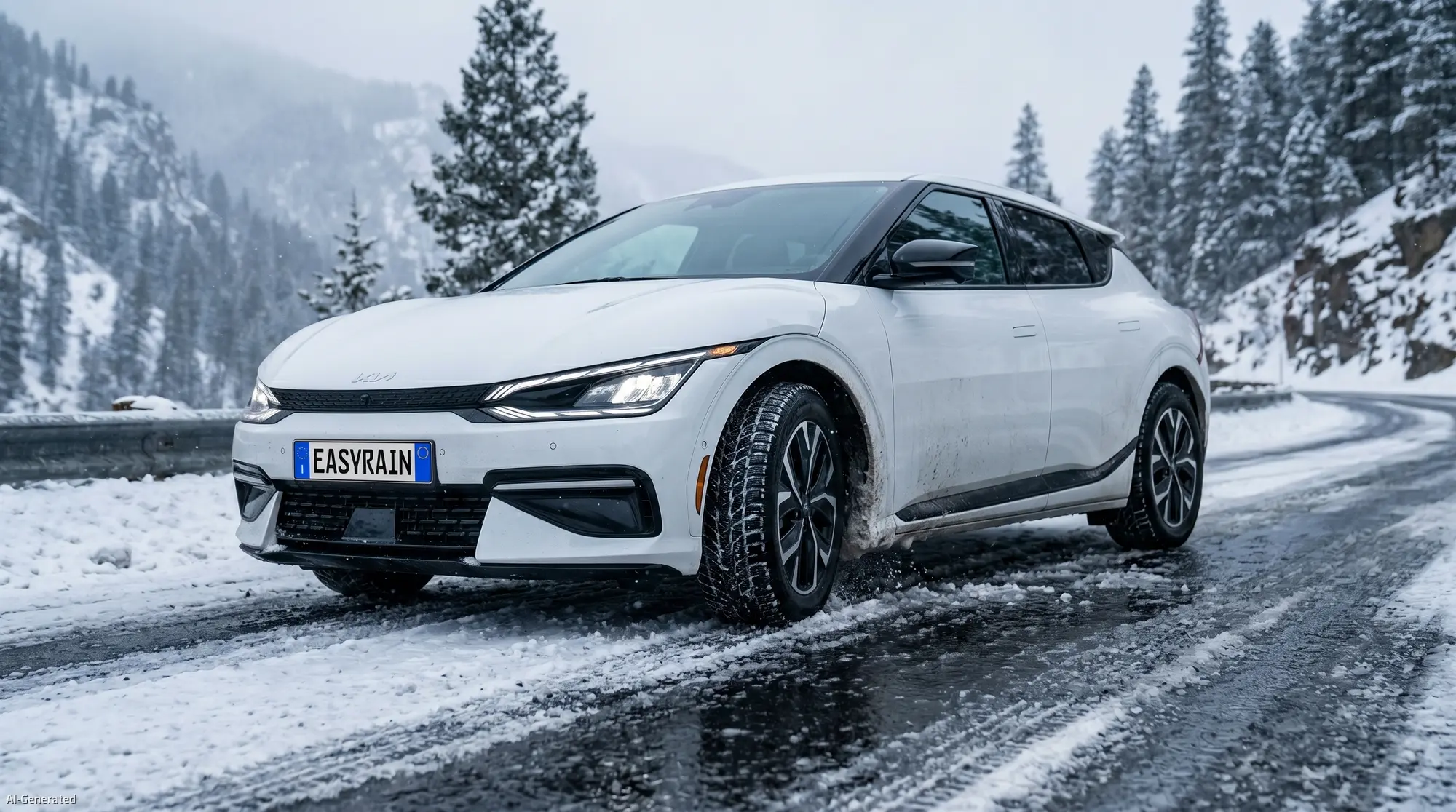
Every winter, the same physics problem returns: a road surface that looked safe at one moment becomes lethally slippery the next. A patch of black ice, a thin layer of compacted snow, or a freezing-rain film can reduce a tire’s friction coefficient from 0.7 on dry asphalt to below 0.15 on ice, a reduction that standard braking systems and ADAS suites were never fully designed to anticipate.
The evidence is global, peer-reviewed, and deeply alarming. Academic studies from Finland and Norway, alongside institutional data from the U.S. Federal Highway Administration and the European Commission’s 2024 road safety report, consistently point to winter road surfaces as one of the most underestimated contributors to traffic fatalities. And yet the automotive safety stack, cameras, LiDAR, radar, ABS, ESC, is still fundamentally a reactive system. It responds to loss of control rather than preventing it.
This article examines the data behind winter crash risk, the physical mechanisms that make snow and ice so dangerous, and the engineering approaches that are beginning to close what researchers call the “friction perception gap.”
What the Studies Say: Snow, Ice, and the Real Numbers
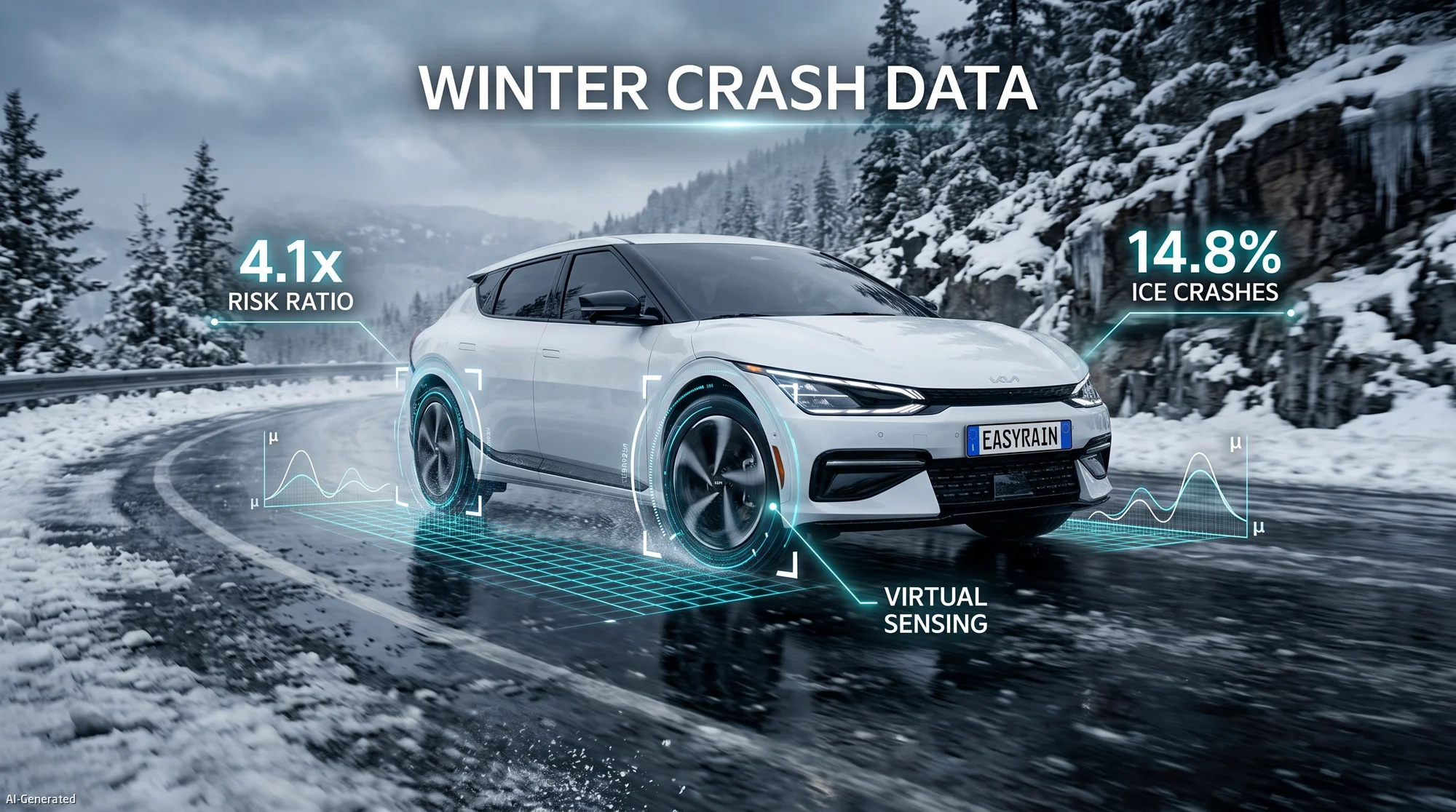
Finland (2004–2006): A 4.1x Risk Ratio
The most rigorous European quantification of winter crash risk comes from a study by Markus Pöllänen et al. at Tampere University of Technology, presented at the PIARC International Winter Road Congress in Québec (2010). Analyzing Finnish police-reported accident records and traffic exposure data from December through March, between 2004 and 2006, the study found that:
- The accident risk on snowy or icy road surfaces was 4.1 times higher than on bare, dry road conditions across Finland as a whole.
- The risk multiplier was lower in northernmost Finland, dropping to 1.8× in Lapland, precisely because drivers there have continuous winter exposure and greater behavioral adaptation.
- The highest risk concentrations appeared during transitional events, freezing rain, slush, where friction drops rapidly and unpredictably, giving drivers and vehicle systems almost no margin to respond.
This 4.1x figure is specific to the Finnish context and the 2004–2006 reference dataset. It is not a universal constant, but it is methodologically robust and broadly consistent with similar studies conducted across Scandinavia and central Europe.
Norway (2011–2018): 14.8% of ICEV Crashes on Snow and Ice
A 2022 study by Liu and Kockelman published in the European Transport Research Review analysed the complete national database of police-reported vehicle crashes in Norway between 2011 and 2018. Among its findings on roadway surface conditions:
- 14.8% of all internal combustion engine vehicle (ICEV) crashes in that Norwegian dataset occurred on snowy or icy roads.
- For electric vehicles (EVs), the equivalent figure was 7.6%, roughly half. The researchers attribute the gap partly to vehicle mass distribution, regenerative braking dynamics, and the socio-economic profile of early EV adopters who may drive more cautiously.
Norway’s high vehicle telemetry density and comprehensive crash reporting infrastructure make this dataset one of the most reliable in Europe for winter road safety benchmarking. The 14.8% figure reflects a specific national sample over a specific period; it should not be extrapolated directly to global crash share without adjustment for regional climate, traffic volume, and infrastructure standards.
United States: More Than 1,300 Deaths Every Year
The U.S. Federal Highway Administration (FHWA), Road Weather Management Program, reports a sobering annual average for the American road network:
- Over 1,300 people are killed and more than 116,800 are injured in crashes on snowy, slushy, or icy pavement each year.
- During active snowfall or sleet events specifically, nearly 900 deaths and approximately 76,000 injuries occur annually.
- Over 70% of the nation’s roads are located in snowy regions receiving more than five inches of average annual snowfall. Nearly 70% of the U.S. population lives in those same regions.
- Arterial traffic speeds fall by 30% to 40% on snowy or slushy pavement. On freeways, light snow reduces speeds by 3–13%; heavy snow by 5–40%.
These figures are presented by the FHWA as multi-year national averages without attribution to a single calendar year. They remain the most widely cited federal benchmark for winter weather road safety in the United States.
European Union (2024): 19,940 Road Deaths, and Winter Still a Persistent Challenge
The European Commission’s road safety statistics for 2024, published by the Directorate-General for Mobility and Transport on 17 October 2025, confirm that:
- 19,940 people died on EU roads in 2024, a 2% reduction versus 2023, marking continued but insufficiently rapid progress toward the EU’s Vision Zero target (halving road deaths by 2030).
- The EU average fatality rate stands at 45 deaths per million inhabitants.
- Sweden leads with the lowest rate at 20 deaths per million, while Romania at 78 per million and Bulgaria at 74 per million record the highest.
The contrast between Sweden’s road safety performance and the EU average is not accidental. Sweden’s winter driving environment, and its role as the global benchmark for cold-weather vehicle testing, underlines that low-friction road safety is an engineering discipline as much as a regulatory one.
Why Grip Knowledge Matters: The Physics of Braking on Ice
Understanding why snow and ice are so deadly requires a brief excursion into tire-road contact mechanics.
On dry asphalt, a typical tire delivers a friction coefficient (μ) of approximately 0.7–0.9. On compacted snow, μ drops to 0.2–0.4. On smooth ice near 0°C, μ can fall below 0.1. The kinetic consequences are severe: a vehicle traveling at 80 km/h on dry asphalt needs roughly 45 metres to stop under maximum braking. On ice, the same vehicle may require three to four times that distance, often exceeding 150 metres.
The critical problem for modern safety systems is not that they fail to brake hard enough, it is that they do not know in advance that the surface beneath them has changed. ABS, ESC, and standard ADAS perception systems (cameras, radar, LiDAR) are fundamentally reactive: they intervene after grip loss is already occurring. Cameras can classify white pixels as “snow” but cannot measure the actual friction coefficient available for braking and cornering. LiDAR maps surface geometry, not adhesion quality. Radar cannot distinguish between wet asphalt and black ice.
The result is what engineers call the friction perception gap: a structural blind spot between what a vehicle’s sensor suite can see and what the tire-road contact patch is actually experiencing.
This gap is narrowest on tracks like those in Arjeplog, Sweden, where the world’s most demanding winter proving ground protocols are run. It is widest on a public road at 06:30 on a January morning, where bridge decks and shaded sections freeze first and no warning system anticipates it.
Easyrain’s Approach: DAI Snow & Ice and AIS2
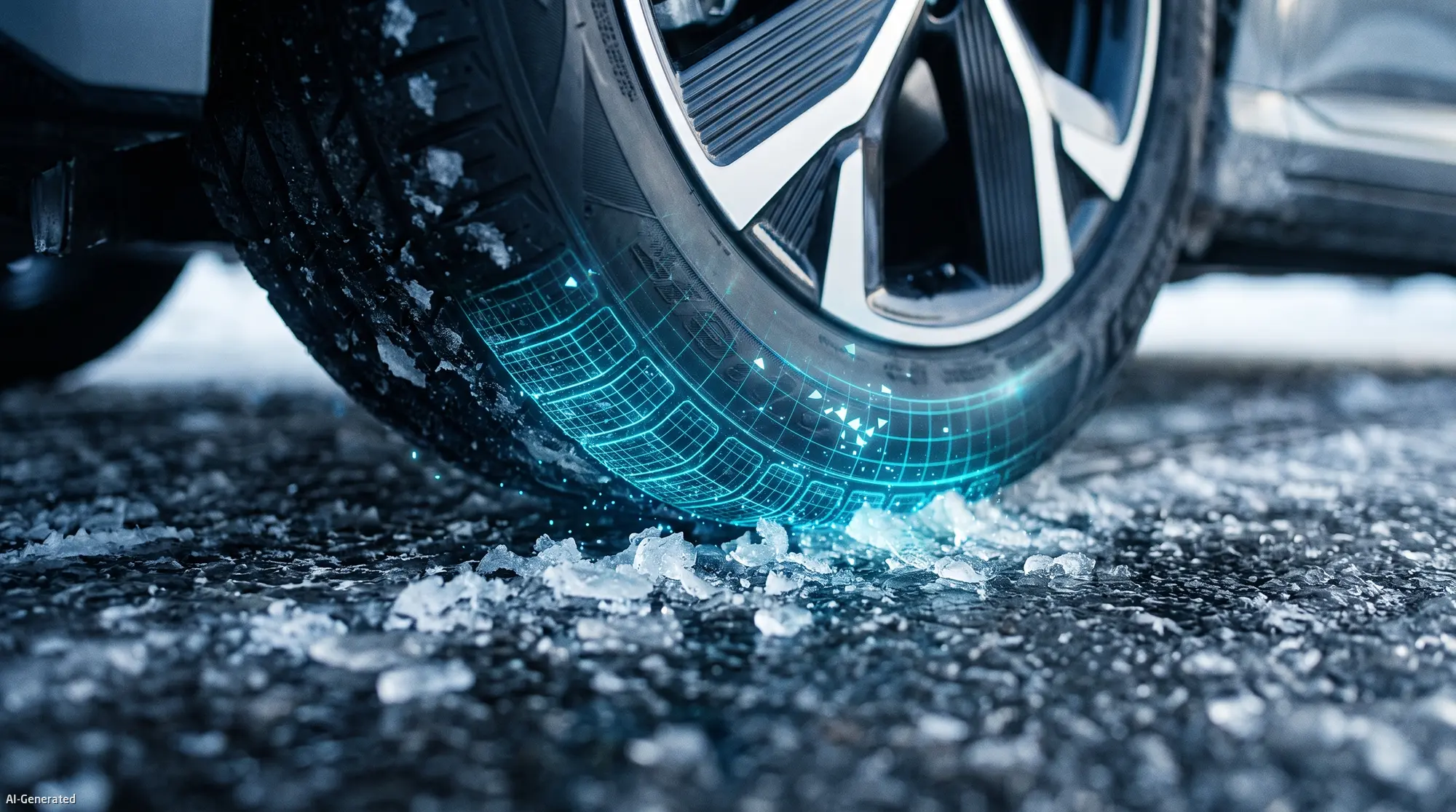
DAI – Virtual Sensor Platform
Easyrain’s DAI (Virtual Sensor Platform) addresses the friction perception gap through a physics-based, hardware-free software layer that runs entirely within the vehicle’s existing ECU infrastructure.
DAI’s Snow & Ice virtual sensor is specifically designed to detect grip reduction on frozen or snow-covered surfaces before tire slip occurs, a critical distinction from conventional ESC systems, which react to wheel speed differentials that are already a symptom of lost traction. The system analyses wheel dynamics, slip ratios, tire rotational frequencies, and vehicle inertial data in real time, identifying micro-frictional changes within milliseconds.
Crucially, DAI operates without artificial intelligence, without cloud connectivity, and without dedicated physical road-condition hardware. It relies on deterministic, physics-based algorithms, not neural network classifiers trained on image datasets. This design choice eliminates the opacity and unpredictability of black-box AI inference in safety-critical contexts, and ensures consistent performance at the edge, independent of network availability.
The practical implication: a vehicle equipped with DAI Snow & Ice has access to a continuous, high-resolution real-time signal about surface grip conditions, information that standard ADAS perception stacks simply cannot provide.
AIS2 – Active Safety System for Snow and Ice
Where DAI senses, AIS2 (Easyrain’s Active Safety System) acts.
AIS2 is the next-generation evolution of Easyrain’s active grip restoration technology, extended from its original aquaplaning application to target snow and ice scenarios specifically. It is an active electromechanical countermeasure designed to restore tire-road adherence before control is lost, not after.
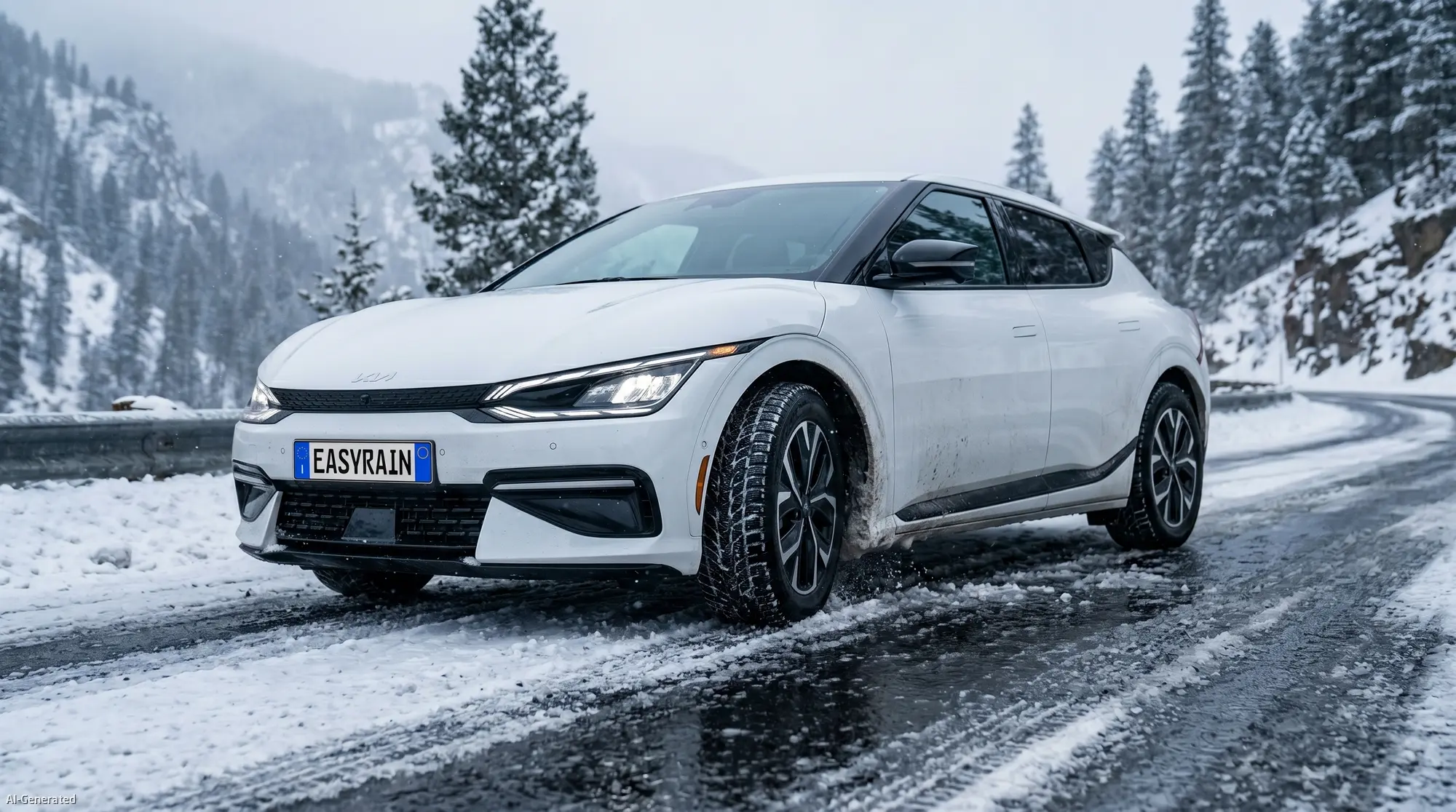
The system was tested at the Colmis Proving Ground in Arjeplog, Sweden, one of the world’s most demanding Arctic vehicle development environments, in cooperation with Hyundai Motor Company. In those experimental conditions, Easyrain claims a 30% reduction in braking distance on ice and compacted snow, a result achieved under controlled Arctic proving ground protocols and presented as a declared experimental performance target, not a regulatory certification.
AIS2 also demonstrates improved traction recovery from standstill on extremely low-friction surfaces, addressing a scenario where conventional traction control systems, which throttle wheel spin reactively, often struggle to restore forward motion efficiently.
The combined architecture of DAI + AIS2 creates a closed-loop active safety system: DAI detects the low-μ condition instantly; AIS2 responds actively to restore grip. This sense-and-act architecture represents a structural departure from the purely reactive safety logic that governs most current production vehicles.
For fleet operators and mobility data applications, ERC (Easyrain’s Cloud Infrastructure) aggregates and shares real-time road condition intelligence across connected vehicles, enabling predictive hazard mapping and fleet-wide safety intelligence, extending the value of DAI’s sensing capability beyond the individual vehicle.