Waymo Suspends San Francisco Bay Area Ride-Hailing Service in Response to Severe Weather Emergency
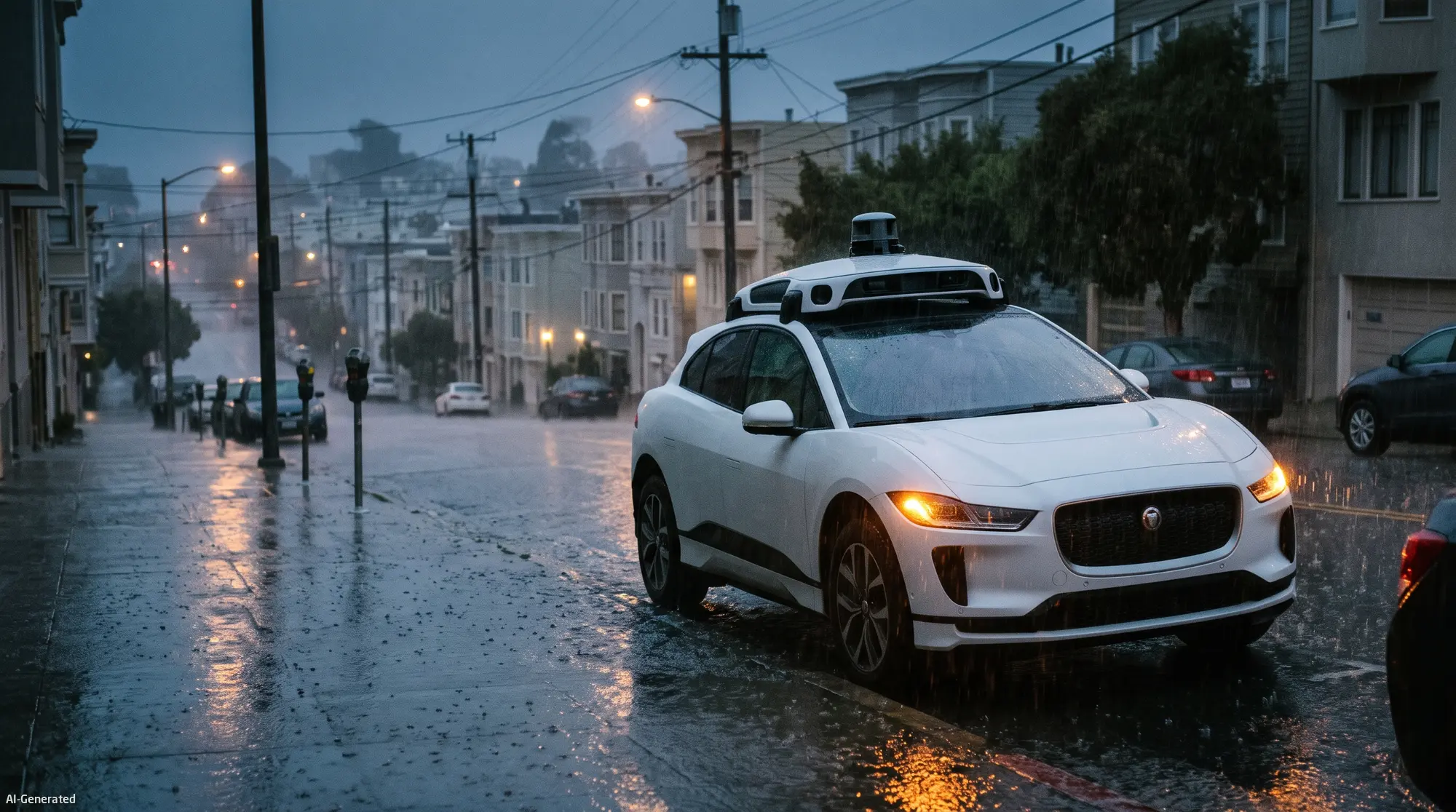
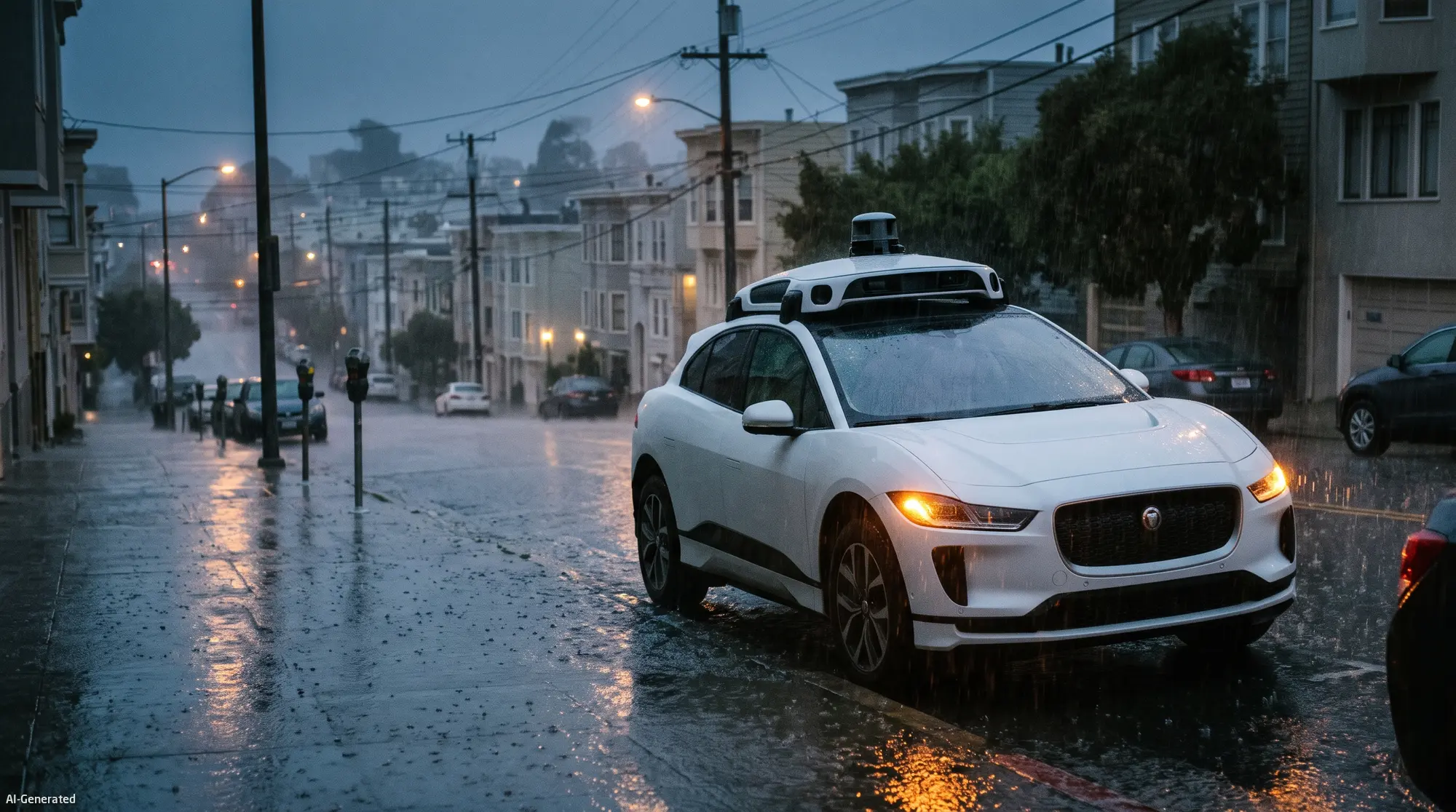
On November 23, 2026, at 4:00 AM PT, Waymo suspended its entire commercial ride-hailing fleet across the San Francisco Bay Area, citing a compound meteorological emergency: an incoming atmospheric river, historic King Tides, and gale-force coastal winds. The preemptive shutdown, coordinated with city emergency officials, marks a documented case of the weather boundaries governing today’s commercial autonomous vehicle operations.
What Happened
Waymo published its decision on November 22, 2026. Three hazards converged simultaneously: an atmospheric river (a moisture-dense air corridor capable of multi-inch hourly rainfall), King Tides (the year’s highest astronomical tidal crests, generated at lunar perigee), and super El Niño-elevated Pacific sea levels. The National Weather Service Bay Area office forecast tidal crests exceeding 9.0 feet, surpassing the prior record of 8.66 feet, and issued Flood Watches for infrastructure near San Francisco International Airport.
Mayor Daniel Lurie characterized the forecast as “extremely serious,” stating: “We are anticipating high tides and rain that this city has never seen before,” and issued a non-essential travel advisory through Wednesday. The San Francisco Department of Emergency Management activated its Emergency Operations Center and deployed flood barriers along vulnerable coastal zones.
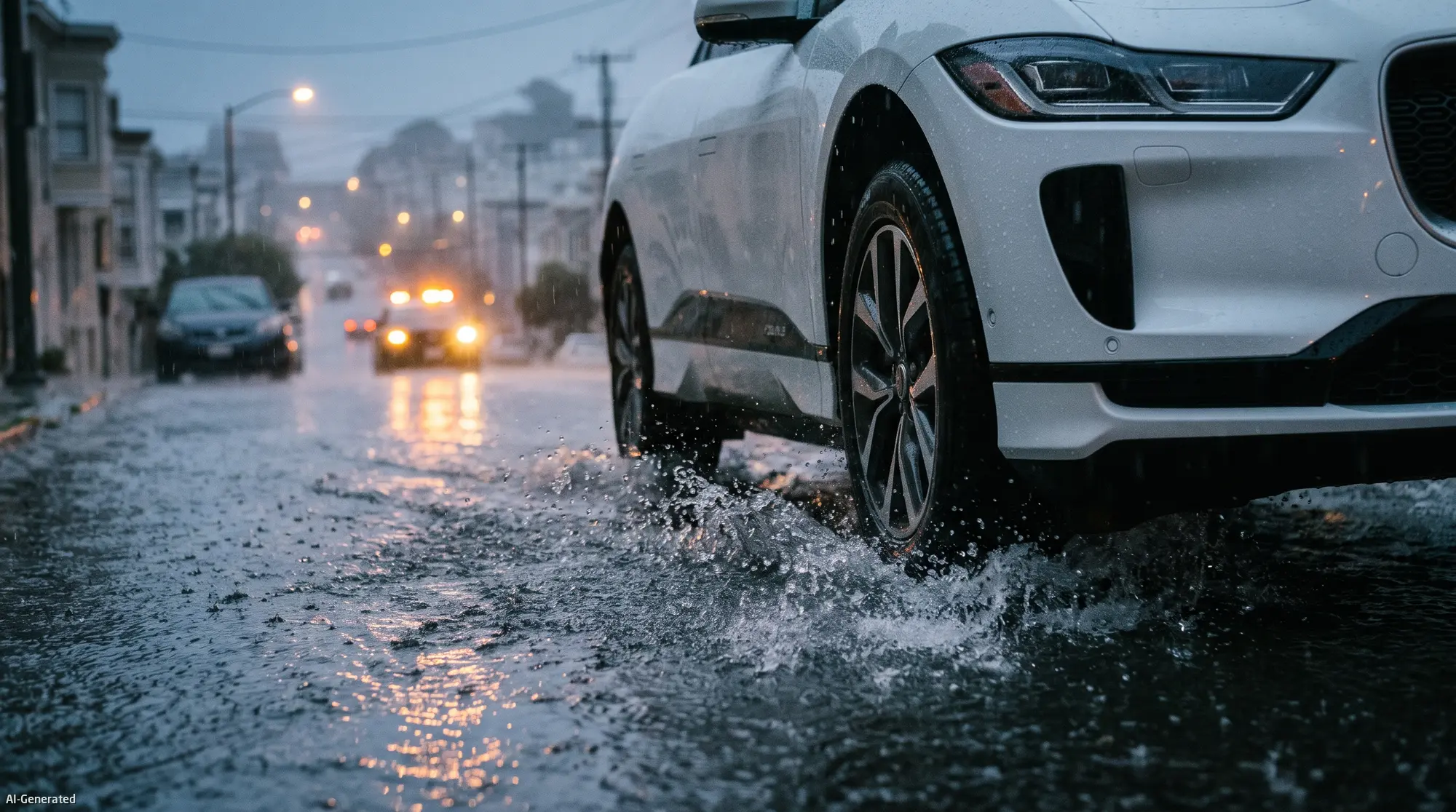
On November 18, 2026, an earlier storm caused multiple Waymo vehicles to stall in standing water on Oak Street and Bayshore Boulevard, San Francisco, blocking lanes and stranding passengers, directly informing the November 23 proactive suspension.
Why It Matters
The suspension exposes a structural constraint in current autonomous vehicle design: the Operational Design Domain (ODD), defined by SAE International Standard J3016 as the environmental and weather conditions under which an automated driving system is certified to operate, does not cover severe urban flooding. When an AV exits its ODD, it executes a Minimal Risk Condition (MRC) by pulling to the roadside, where floodwater accumulates deepest.
According to the Federal Highway Administration’s Road Weather Management Program, wet pavement causes 860,286 crashes, 4,050 fatalities, and 324,394 injuries annually in the United States, 15% of all motor vehicle crashes. During active rainfall, 2,810 people are killed on U.S. roads each year.
A 2021 American Automobile Association study found that in simulated heavy rain, Automatic Emergency Braking failed in 33% of tests at 35 mph (0% dry) and lane-keeping assistance failed 69% of tests, as camera, LiDAR, and radar sensors degrade from water accumulation and optical refraction.
Key Data
- Suspension: November 23, 2026, 4:00 AM PT – full Bay Area fleet
- NWS tidal forecast: >9.0 ft peak (prior record: 8.66 ft)
- Precedent: November 18, 2026 – Waymo vehicles stalled in standing water, Oak Street, San Francisco
- FHWA wet pavement (2019–2023 avg.): 860,286 crashes/year; 4,050 fatalities/year
- AAA AEB failure in rain: 33% at 35 mph; 17% at 25 mph (dry: 0%)
- AAA lane-keeping failure in rain: 69% of tests
Market and Regulatory Context
Commercial autonomous ride-hailing in California requires a California DMV Deployment Permit, mandating ODD weather boundary disclosures, and a California Public Utilities Commission passenger service authorization governing emergency coordination. Both require operators to de-conflict transit corridors during declared public emergencies.
The November 2026 events confirm that proactive fleet suspension, before ODD boundaries are breached, is operationally safer than reactive on-road MRC execution during active flooding. Waymo’s safety framework incorporates real-time meteorological data and guidance from public emergency officials into suspension criteria.
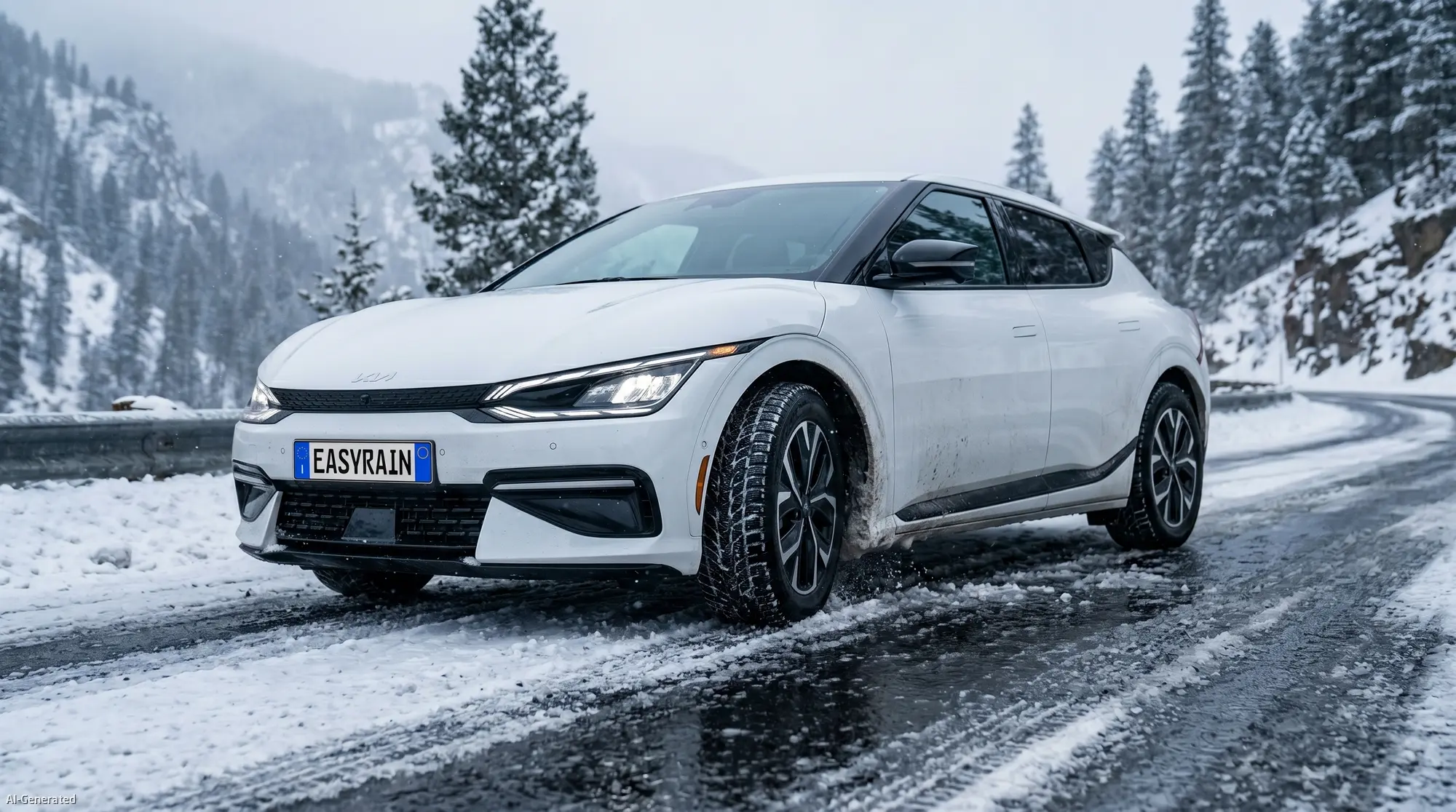
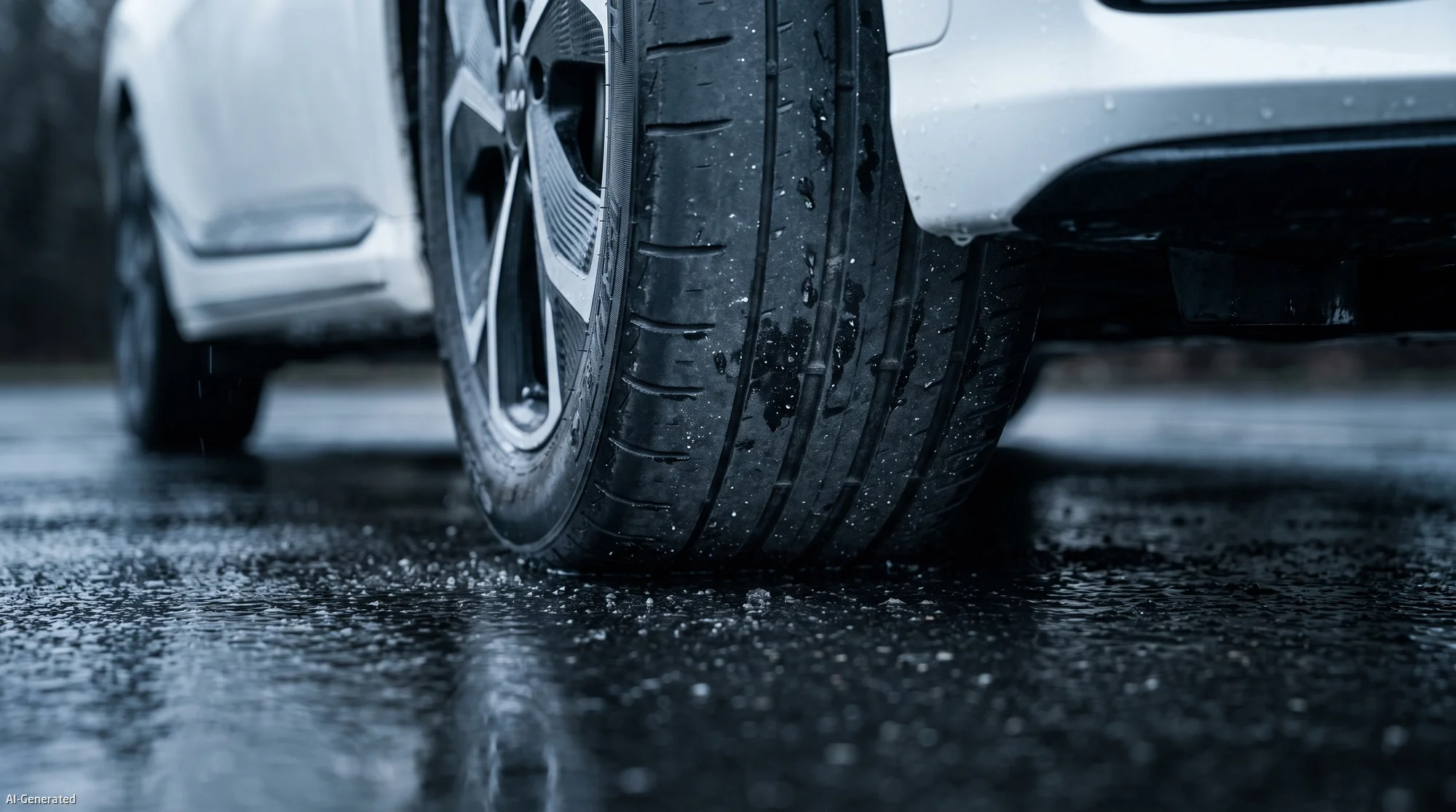
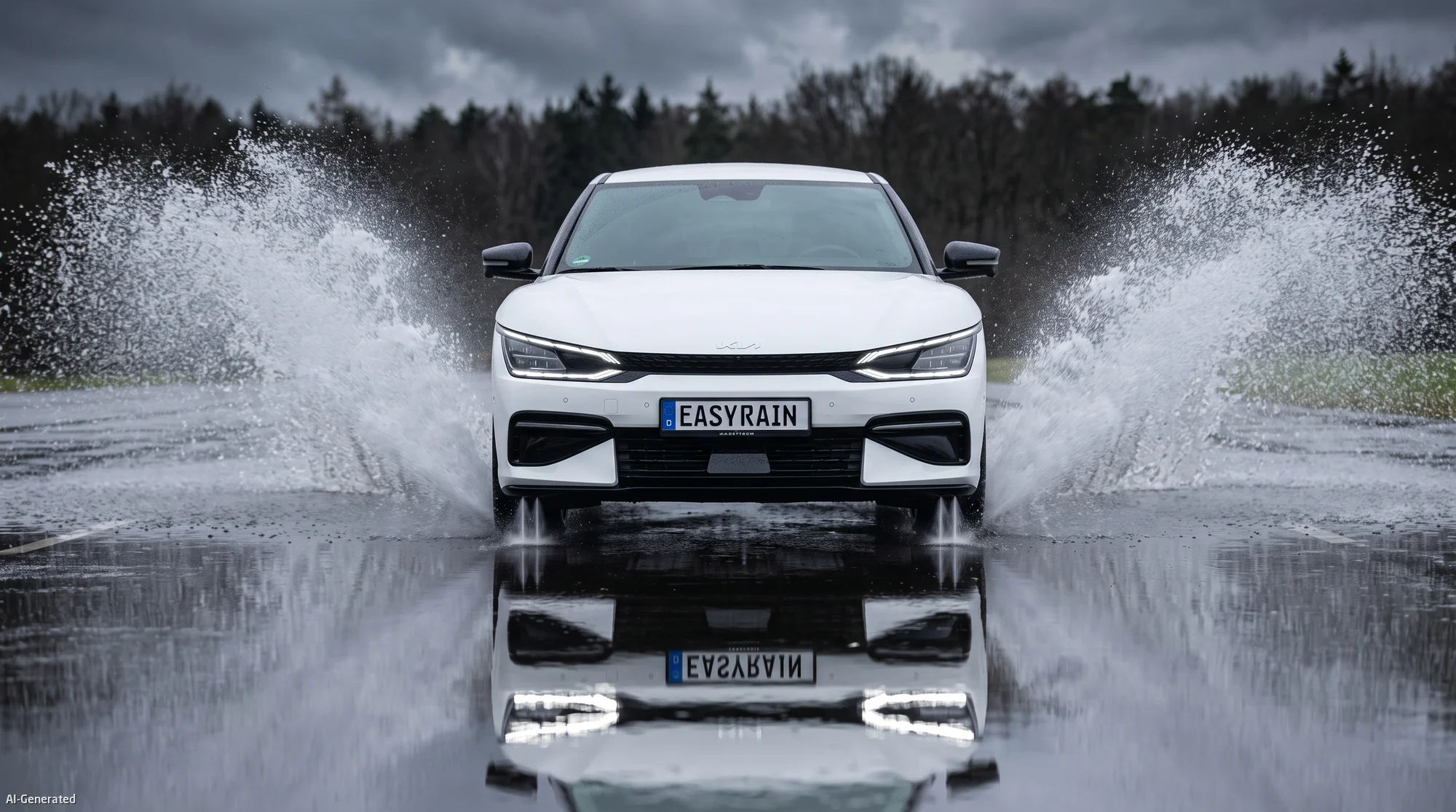
Bridging the gap between current AV weather capabilities and all-weather deployment requires friction data independent of optical sensors. Easyrain’s DAI – Virtual Sensor Platform detects aquaplaning and grip loss in milliseconds using vehicle dynamics signals alone, with no cloud dependency, no AI, and no external weather sensors. The AIS – Active Safety System physically eliminates the water layer ahead of tires, reducing braking distance by 20% and increasing lateral traction by 225% in aquaplaning scenarios. The ERC – Cloud Infrastructure aggregates real-time grip and hazard data across fleets, enabling predictive risk mapping during severe weather.
What to Expect Next
Waymo confirmed it would “gradually resume commercial ride-hailing services once conditions improve,” with no restoration timestamp announced. The November 2026 events are expected to inform California DMV and CPUC review of proactive suspension criteria, sensor redundancy standards for heavy precipitation, and emergency coordination frameworks. Full all-weather autonomous ride-hailing, covering atmospheric river conditions, standing water, and coastal flooding, remains an engineering objective, not an operational standard.