Optical Sensors Are Ineffective on Low Grip: Why Easyrain DAI Steps In Where Vision Fails
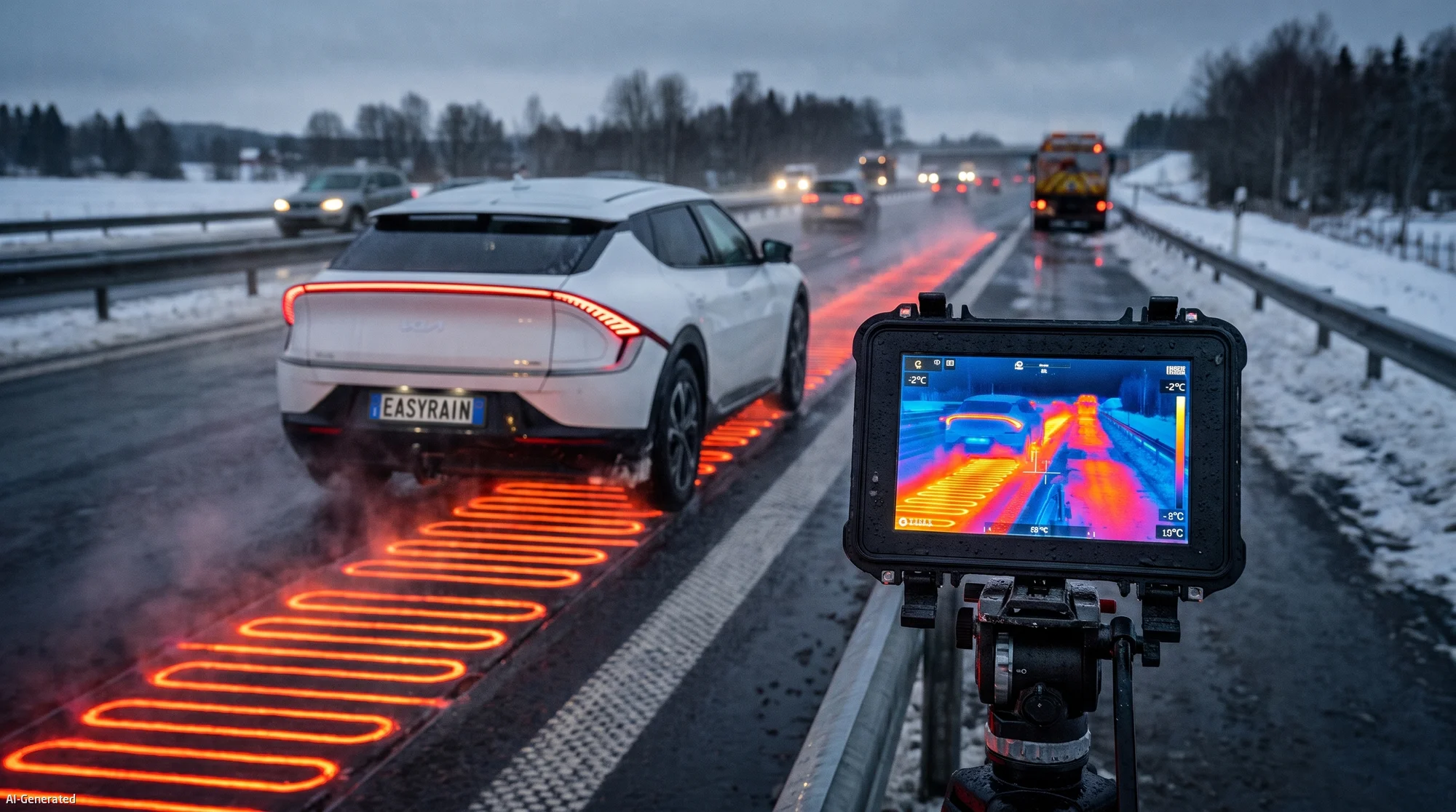
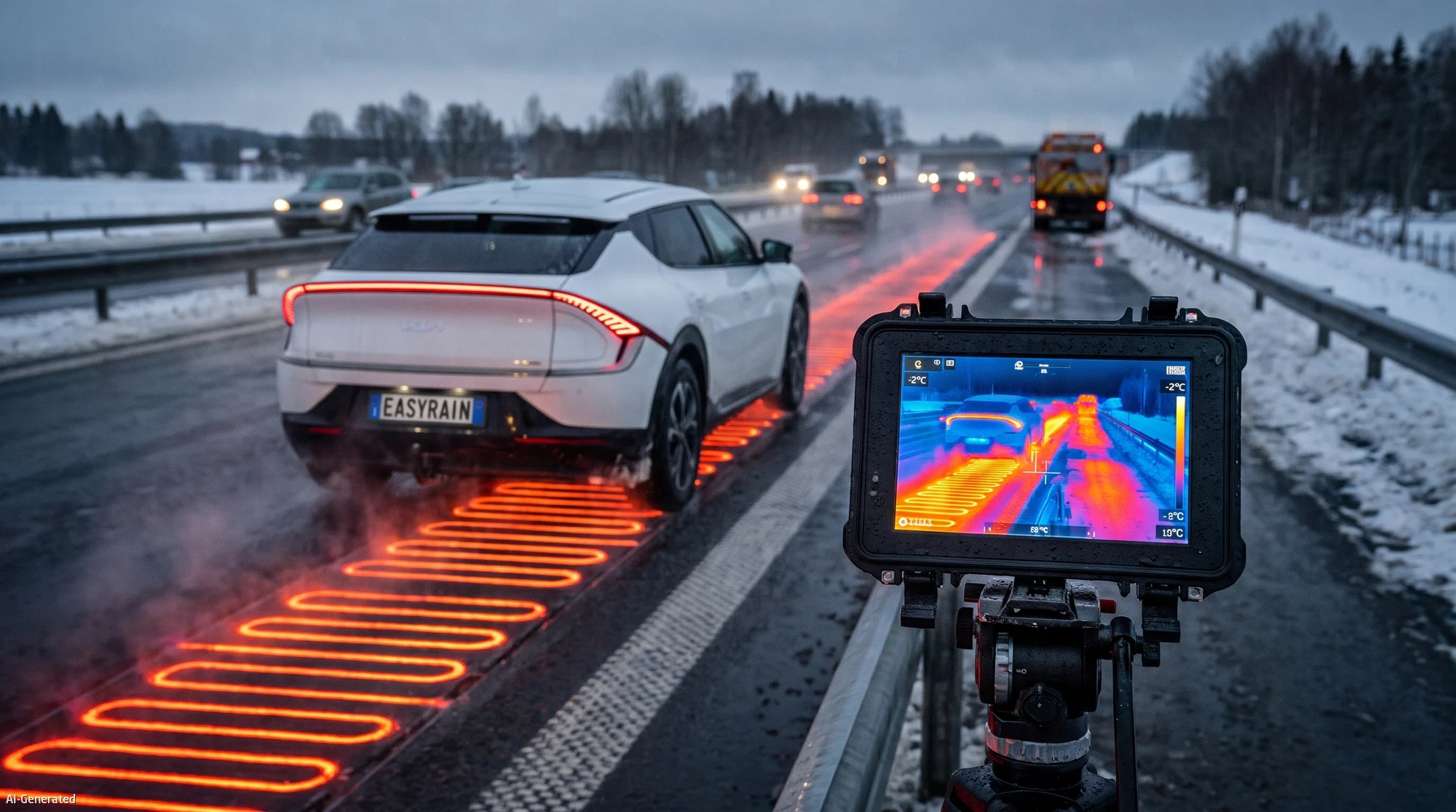
A 2026 peer-reviewed study published in Case Studies in Construction Materials demonstrates that infrared thermal imaging, combined with a segmented British Pendulum Number (BPN) prediction model, can monitor friction recovery on actively heated expressway pavement in real time – without lane closures or contact instruments. More importantly, the research provides rigorous empirical proof of a critical safety vulnerability: conventional optical sensors and visual inspection methods are ineffective at detecting ultra-thin, transparent ice layers that remain on pavement even after active heating systems have been running for over an hour. The field validation, conducted on China’s Qintang Expressway, directly illustrates why optical ADAS systems remain blind to black ice and why vehicle-side deterministic dynamic sensing, such as Easyrain DAI – Virtual Sensor Platform, is essential to bridge the detection gap.
What Happened
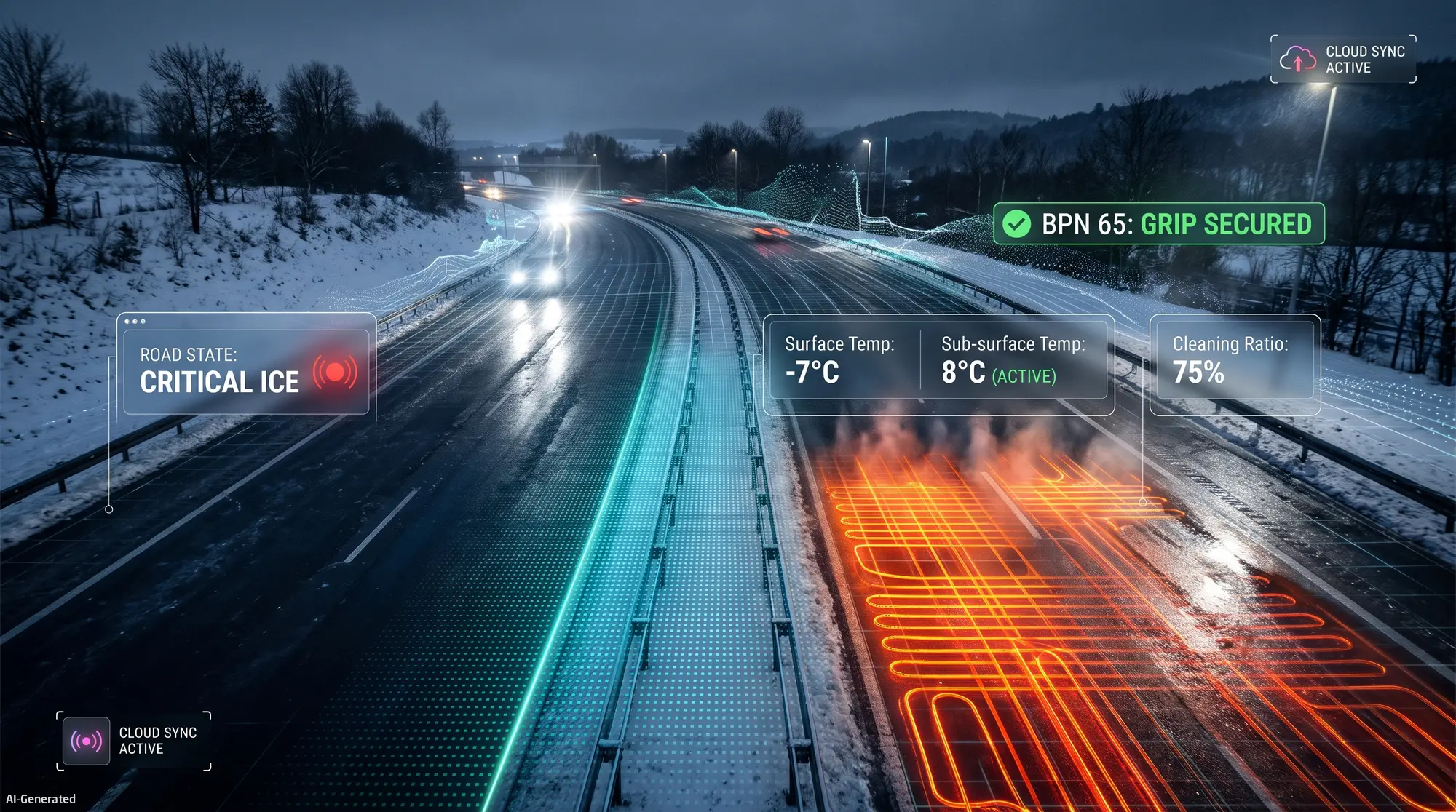
Researchers from Chinese institutions designed a laboratory-and-field framework to track how skid resistance evolves during ice melting on actively heated asphalt, as reported by Scienmag. The experimental platform used a programmable freezing chamber housing a full-scale 120 cm × 120 cm asphalt slab with embedded carbon fiber heating cable (11 m length, 10 cm spacing). A long-wave infrared sensor operating in the 8–14 μm range (80 × 62 pixel array, ±1.5 °C accuracy) captured surface temperature distribution and derived a “cleaning ratio”: the proportion of thermally exposed asphalt pixels versus ice-covered pixels.
Skid resistance was measured in parallel using the British Pendulum Tester per ASTM E303, yielding a dataset of 72 valid trials spanning ambient temperatures from −1 °C to −15 °C, heating powers from 200 to 400 W/m², and relative humidity from 70% to 90%. The study also catalogued related durability research through the Transportation Research Board’s TRID database, which documents the mechanical behavior of induction-heated ice-melting overlays under dynamic shear stress.
Why It Matters
The study’s most operationally significant finding comes from the Qintang Expressway field test. Under conditions of −7 °C ambient temperature, 2 m/s wind, and an initial ice thickness of 6 mm, operators ran the embedded heating system for 1.5 hours. At that point, the road surface appeared visually dark and clear – consistent with a pavement ready to reopen. However, the thermal imaging system and BPN prediction model detected a remaining ultra-thin transparent ice layer. The measured BPN was 36.
For context, a BPN of 36 places the surface firmly inside the critical hazard zone. The surface had the optical appearance of dry asphalt but the grip characteristics of sheet ice. A vehicle braking at highway speed on such a surface would encounter braking distances and lateral instability equivalent to fully iced conditions.
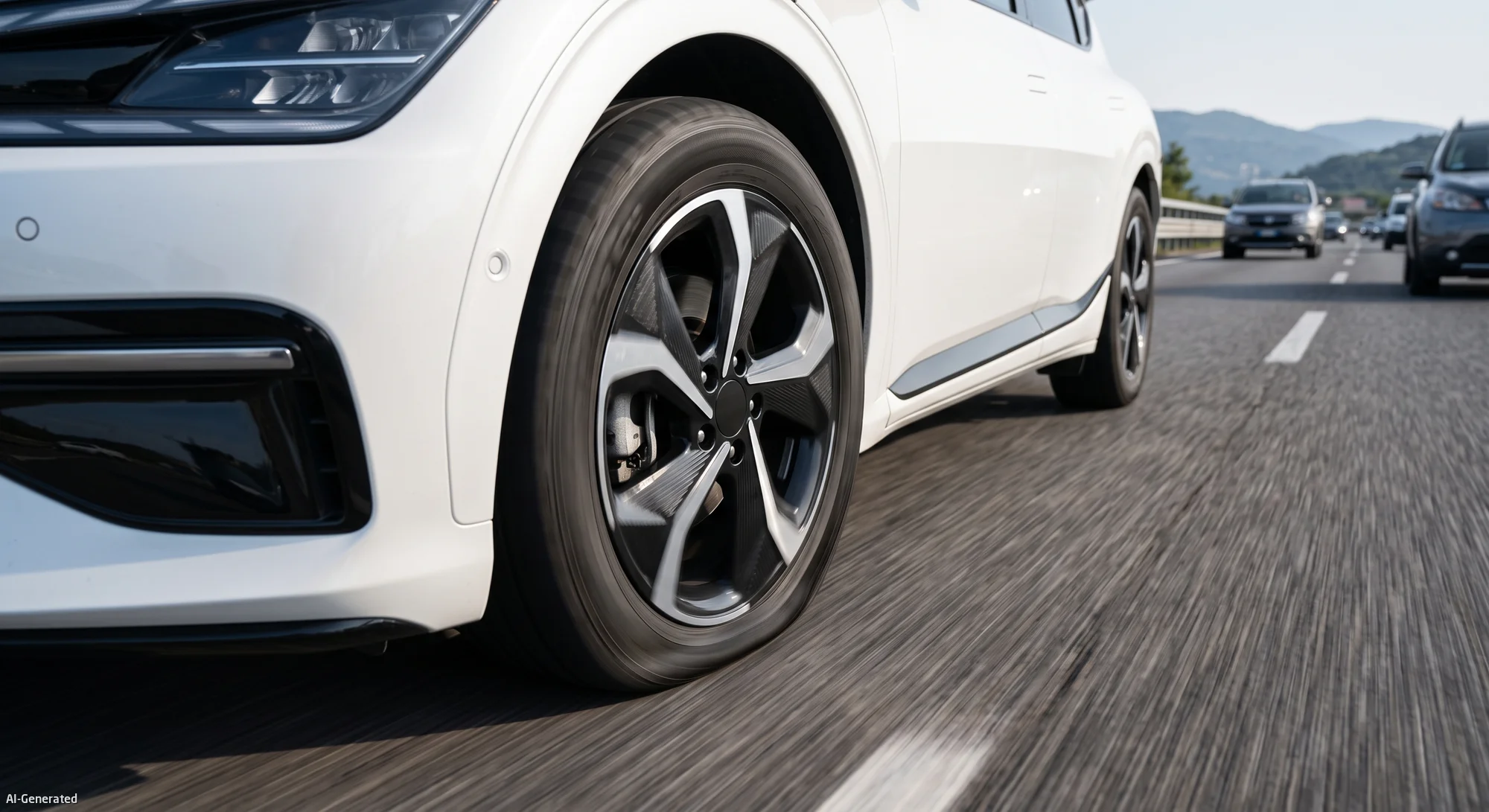
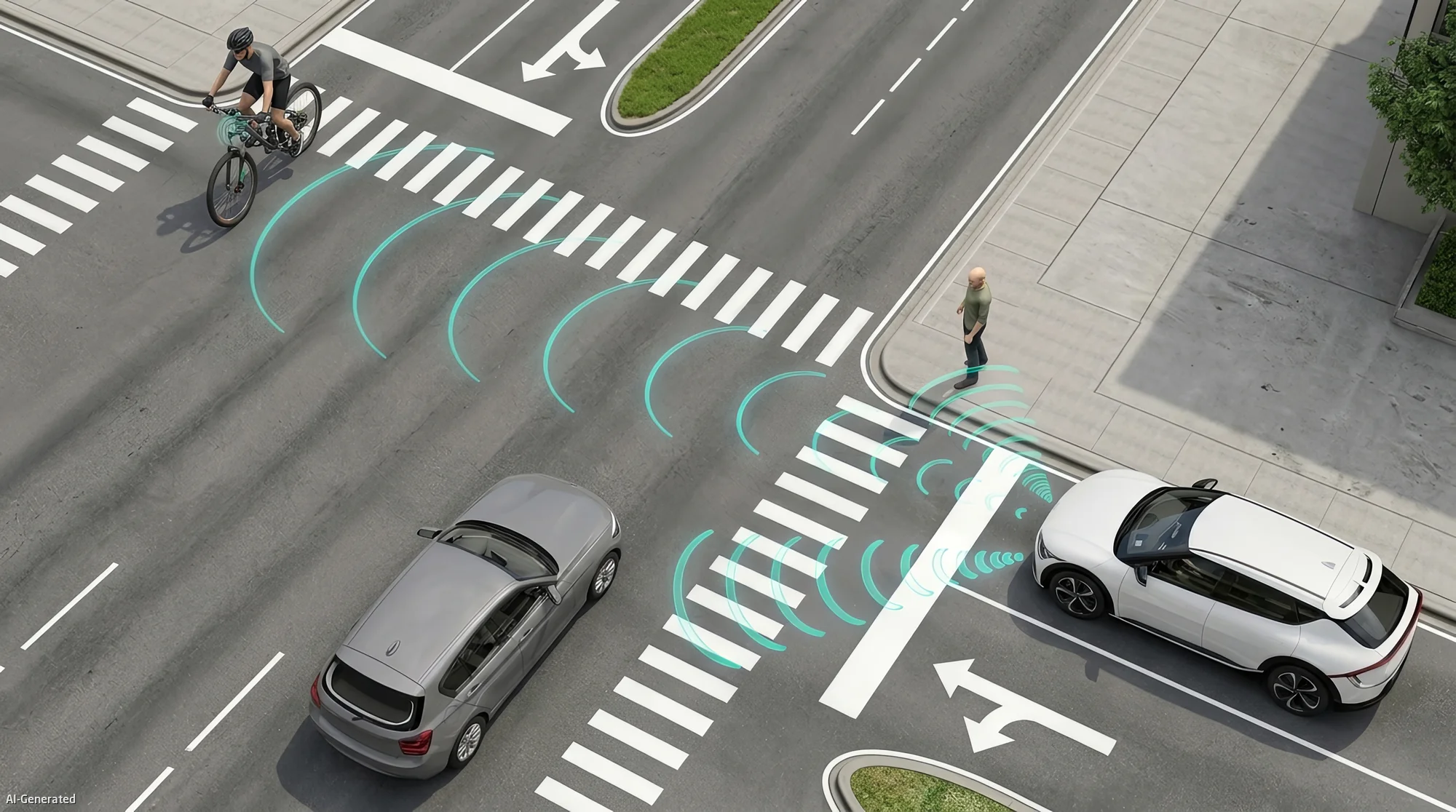
This finding exposes a known structural limitation of camera-based and visible-light inspection systems: transparent or semi-transparent ice layers produce insufficient optical contrast against dark asphalt to trigger any warning. The same limitation applies to ADAS sensor suites – cameras, LiDAR, and radar classify road geometry and surface optical reflectivity, but cannot measure the physical friction coefficient at the tire contact patch. Easyrain DAI – Virtual Sensor Platform approaches this gap from the vehicle side, analyzing wheel dynamics, slip ratios, and inertial responses in real time to detect low-grip conditions deterministically – without relying on optical signals or artificial intelligence.
Key Data
The study establishes three operationally actionable BPN thresholds, cross-referenced with Chinese road safety regulations, the Penn State speed-friction conversion model, and friction benchmarks from the Swedish National Road and Transport Research Institute (VTI rapport 980):
| Safety Tier | Cleaning Ratio | BPN Value | Operational Meaning |
|---|---|---|---|
| Green – Safe Reopening | ≥ 70% | BPN ≥ 65 | Traffic permitted at up to 80 km/h (on 120 km/h design roads) |
| Yellow – Transitional Alert | 40–69% | 45 ≤ BPN < 65 | Maintain closures; continue active heating |
| Red – Critical Hazard | < 40% | BPN < 45 | Brake failure and rollover risk; immediate prohibition |
Additional quantified findings from the study:
- For every 1 °C increase in ambient temperature, BPN recovery rate during melting increases by 0.94 BPN/h.
- For every 100 W/m² increase in heating power, BPN recovery rate increases by 2.23 BPN/h.
- Ambient humidity (70–90% RH) showed no statistically significant effect on BPN reduction, melting time, or heating rate.
- The field prediction model reached R² = 0.892 across the complete outdoor melting cycle on the Qintang Expressway.
- Laboratory cleaning ratio prediction achieved R² = 0.96, with median expanded uncertainty below 5.0%.
On surfaces where BPN drops below 45 – the study’s red-alert threshold – conventional reactive systems including ABS and ESC operate beyond their effective range. Easyrain AIS – Active Safety System is designed to intervene at precisely this boundary, restoring physical grip through active mechanical action before directional control is lost, rather than responding to a loss of control already in progress.
Future Outlook
The thermal imaging and BPN modeling framework described in this study is designed to be transferable beyond carbon fiber electric heating systems. The authors note that the same monitoring logic applies to hydronic (fluid-circulation) heating systems, conductive asphalt, and heat-pipe installations – covering the main active heating technologies currently deployed in cold-region infrastructure.
The study also identifies clear limits on the method’s applicability. Prediction accuracy drops by approximately 24% on compacted snow due to the porous surface structure, and by approximately 19% under intense direct sunlight due to background infrared noise. The current model does not incorporate pavement aging, surface texture evolution over the service life, or traffic load effects – areas identified for future refinement.
From a data aggregation and infrastructure management perspective, the per-section BPN prediction signal generated by thermal monitoring systems represents a real-time grip dataset with potential for fleet-level integration. Easyrain ERC – Cloud Infrastructure collects and shares grip-condition data across vehicles and road networks, enabling predictive hazard mapping that could incorporate infrastructure-side friction signals of this type alongside vehicle-side dynamics data.